Memo: “The Buffett Blueprint”
Four Lessons from Warren Buffett Worth Repeating
While recent headlines have focused on the sharp decline in tariffs, a much bigger shift in the investment world is quietly taking shape. Warren Buffett, the longtime CEO of Berkshire Hathaway, has announced he’ll be stepping down at the end of 2025. [1] At 94 years old, he’ll be closing the chapter on an 83-year investing career that started when he bought his first stock at age 11.
Now, most of us aren’t aiming to build another Berkshire Hathaway, and few—if any—have matched Buffett’s knack for picking winning stocks. But that’s not really the point. What’s always stood out to me is how consistent he’s been in repeating a small set of foundational ideas. These are ideas that align with much of our own investment philosophy, and they’re worth revisiting.
Here are four of those core principles—simple, timeless, and as relevant now as ever.
1. Stocks Are the Place to Be for Long-Term Investors
For Buffett, equities have always been the bedrock. That hasn’t changed. In his most recent shareholder letter, he wrote:
“Despite what some commentators currently view as an extraordinary cash position at Berkshire, the great majority of your money remains in equities. That preference won’t change.”[2]
This isn’t just a matter of preference. Buffett has spent decades explaining the reasoning behind this. In his 2011 letter, he breaks it down further—why stocks, not bonds or cash, have been his primary choice for preserving and growing wealth over time. That logic is a good reminder that ownership in real companies, with real earnings and long-term potential, remains one of the most sound ways to invest.
2. Market Forecasts Aren’t Worth Our Time
Buffett once said plainly:
“We have no idea whether the market is going to go up today, next week, next month, or next year.”[3]
That was back in 1999. And yet, financial news today is still full of predictions, charts, and “expert” opinions about what comes next. The truth is, no one knows. If the most successful investor of our time doesn’t claim to know where markets are headed in the short term, it’s wise for us to hold forecasts lightly, if at all.
Instead of trying to time the market, we aim to build plans that work regardless of the next headline or market swing. We don’t bet on the next move—we plan for the next decade.
3. Volatility is Opportunity in Disguise
One of Buffett’s more lighthearted remarks came during a 2012 shareholder meeting, when he said:
“The beauty of stocks is they do sell at silly prices from time to time. That’s how Charlie and I have gotten rich.”[4]
The point is simple: short-term declines aren’t disasters—they’re often gifts. Volatility is uncomfortable, yes, but for the long-term investor, it creates opportunity. The market has rewarded patience and courage time and again, and we’ve seen it firsthand in our own experience over the last 13 years.
We remind our clients often: when prices fall, values don’t disappear—they go on sale.
4. Think Like an Owner—Forever
Buffett is also known for saying:
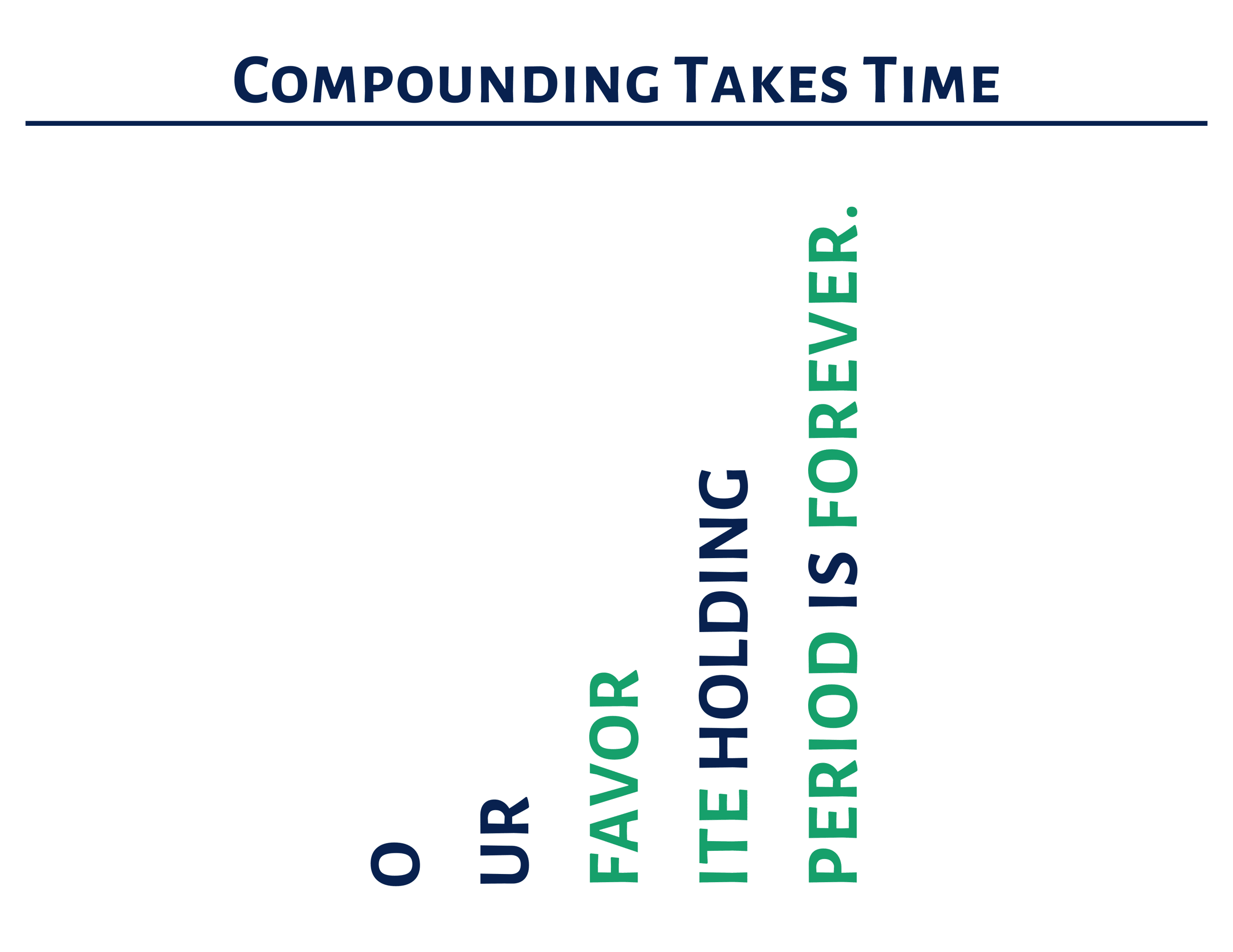
“Our favorite holding period is forever.”[5]
This isn’t just a catchy phrase. It’s a reflection of a deeper truth: long-term ownership, uninterrupted by panic or second-guessing, is where compounding really shines. The more time you give your investments to grow, the more likely you are to benefit from the snowball effect of compounding interest.
We talk a lot about this principle—being a “permanent owner.” Not because it’s flashy, but because it works.
There are no guarantees in investing, and we’d never pretend there are. But if we had to point to four principles worth building around, these would be near the top of the list. They’ve stood the test of time, and we believe they’ll continue to serve investors well in the years ahead.
Stay the course.
[1] 2024 Berkshire Hathaway Shareholder Letter [2] 2011 Berkshire Hathaway Shareholder Letter (see page 16) [3] Buffett and Munger Unscripted by Alex Morris [4] 2004 Berkshire Hathaway Shareholder Letter [5] Warren Buffett’s Ground Rules by Jeremy Miller