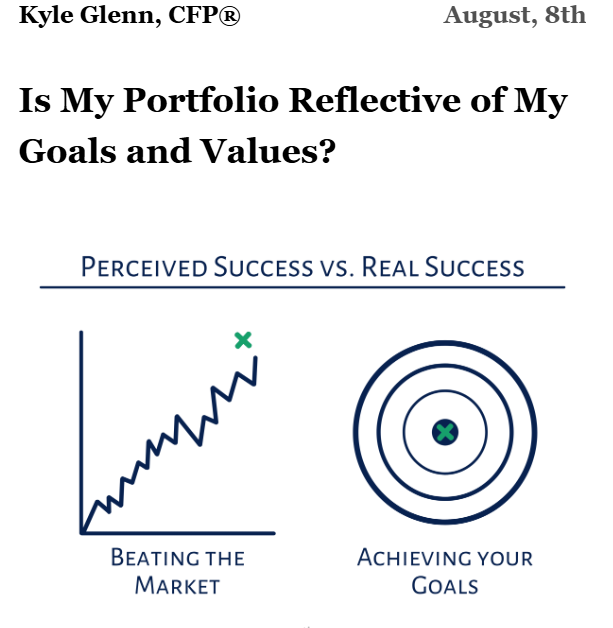
 What Are You Investing For?
For every investor, the purpose an investment plays in their life is different. The twenty-year-old has a significantly different outlook on their portfolio than an individual nearing retirement does when looking at their nest egg. That is why investing must first start with purpose. Every dollar you invest is intended to generate a return. But without specific goals in mind for that return, there is no clear purpose, and without a clear purpose, there is no way you can have a sound financial plan.
Goals are the lifeblood of your portfolio. They determine timelines, investment selection, and end results.
Short-term goals (1-3 years) mean short-term investments – CDs, Money markets, bonds.
Long-term goals (5 years +) change the portfolio to include ownership of companies that have historically yielded higher returns.1
Trouble begins to occur when you put short-term assets in your long-term goal bucket, or when you put long-term assets in your short-term bucket. Clear goals ensure that the money you need at the time you need it will have the highest likelihood of being there for use.
Take a moment and write down your short-term and long-term goals. This newsletter will still be here in 5 minutes.
Now, is the money you need in 3 years or less in relatively stable accounts? Is the money you’ll need in retirement working hard for you or is it sitting in a CD? This may warrant a conversation.
Do Your Investments Support What You Believe In?
As an investor, you have the right to put your dollars to work for you with very low barriers to entry. The financial markets are so well established and maintained that almost everyone can have access to it. As an investor in the financial markets, you also have a right to dictate what your dollars support based on your faith, convictions, or ethical concerns.
Whether it’s avoiding companies that are involved with abortion, weapons manufacturing, or unethical labor, or favoring companies that promote a specific ideology you also support, you have a say in what your money is building.
Many clients come to Glenn Financial wanting portfolios that are not only sound, but purposeful. This is where values-based investing (also called Biblically Responsible Investing) can make a meaningful difference. The goal is to ensure that your portfolio (to the best of its ability) is not supporting agendas counter to your faith values.
Our most successful clients are those that have alignment between their goals, investments, and values. That is not to say that our values-based portfolios are more successful than their standard counterparts. But it is to reinforce that regardless of where your specific convictions lie, you will find the most success when your convictions are aligned with your end goal.
Risk Tolerance vs. Conviction: Are You Comfortable With Both?
Speaking of convictions, it’s my conviction to prepare for what can go wrong, while investing for what can go right. (If you’re curious, we have posted a list of our convictions on our website.) What this means in practice is that we must prepare for our inevitable exposure to risk.
When working with clients, I frame this issue with the following question: “Do you want risk now, while you’re able to continue working, or later when you can no longer?”
First, let’s be clear about what risk is. Nick Murray puts it, “Risk isn’t principal loss; it’s the extinction of your purchasing power while you’re still alive.”2
Risk, therefore, is not the fluctuations of your portfolio, but more poignantly, the inability to buy groceries. Risk is not the temporary decline in value on “Liberation Day”, it’s the permanent loss you would have experienced had you sold on April 8 and not experienced the magnificent recovery since that time.3
Are You Diversified in a Way That Reflects Intentionality?
US equities have been the golden child of market investing for nearly the entire millennium. Barring significant downturns in 2000, 2008, and 2022, the S&P 500 is up nearly 200% over the last 10 years at the time of this writing.4 Many investors focus on US equities without considering other options. For example, with proper diversification, internal equities, as represented by Vanguard’s flagship fund VTIAX, are up 15.81% year to date, outpacing the S&P 500.
A well-designed portfolio should balance growth, income, and protection. But it can also reflect intentionality in how those components are selected. Are you building wealth just for accumulation, or are you aiming for generosity and impact? Are your assets structured to prepare you for the next season of life—or are they reacting to market noise?
Diversification isn’t just about owning different stocks. It’s about aligning your portfolio with a broader purpose.
Are You Giving with Your Investments, or Only with Your Wallet?
Many people think of giving as something that happens after the portfolio grows. But in reality, your investments themselves can be a tool for generosity. For those of you who give substantially to charities or the church, your investment portfolio can be a more efficient way to do so. Let’s take a look at the image below.
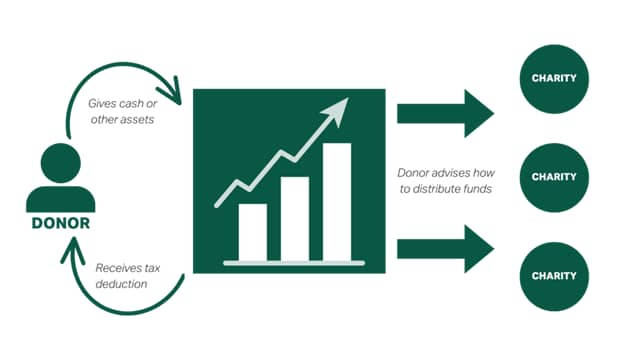
You as an investor have the ability to give from your investment portfolio rather than through cash. This serves a two-fold purpose:
1. You receive a charitable tax deduction in the current year, having the same net effect as giving cash.
2. You replenish your investment account with the cash you were going to give to charity. This increases your cost basis in your account, which can help reduce future taxes if you were to sell a position.
When Did You Last Review Your Portfolio? Goals change. So do values, life seasons, and tax laws. That’s why reviewing your portfolio isn’t just a financial practice—it’s a stewardship responsibility. We recommend checking in at least annually, or anytime there’s a significant life change.
Ask yourself: Has anything changed in my life that should be reflected in my portfolio?
If something has changed, reach out and schedule a call.
In the meantime,
Stay the course!